




Digital experiences now expand museum exhibits, offering intuitive, inclusive tools for every visitor. They make learning accessible to everyone in fresh ways. The AI era is directly meeting evolving visitor expectations. Human knowledge remains at the center while personal experiences are created. This way, visitors can ask better questions, understand exhibits, discover relevant collections, and navigate complex spaces with confidence.
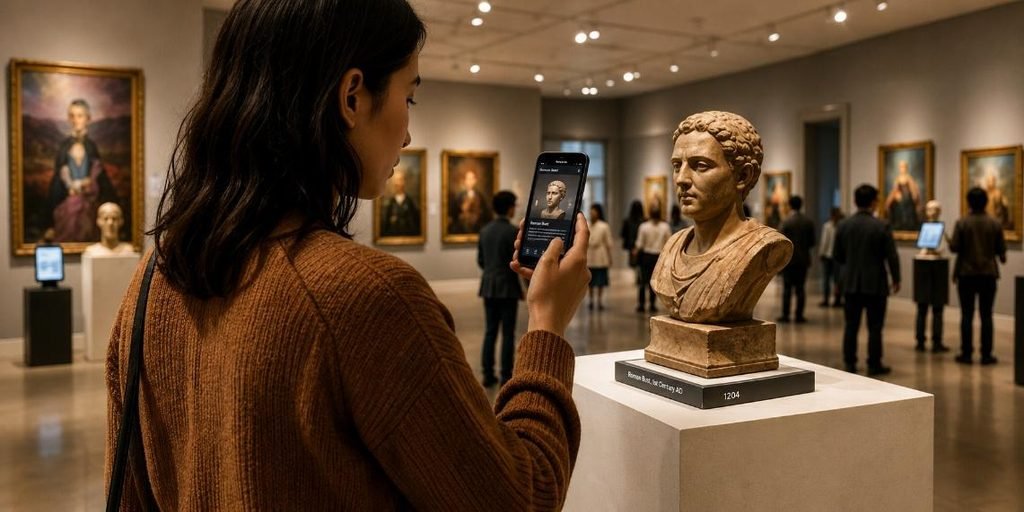
The main contributors to creating such experiences are:
- Machine Learning
- Computer Vision
- Natural Language Processing
- Generative AI
- Conversational AI
Together, these technologies make museum visits intelligent, creating experiences that are more relevant, inclusive, accessible, and meaningful.
Machine Learning for Personalized Visitor Experiences
Personalization is a major opportunity for machine learning. Every visitor is different and will have different ways of exploring a museum.
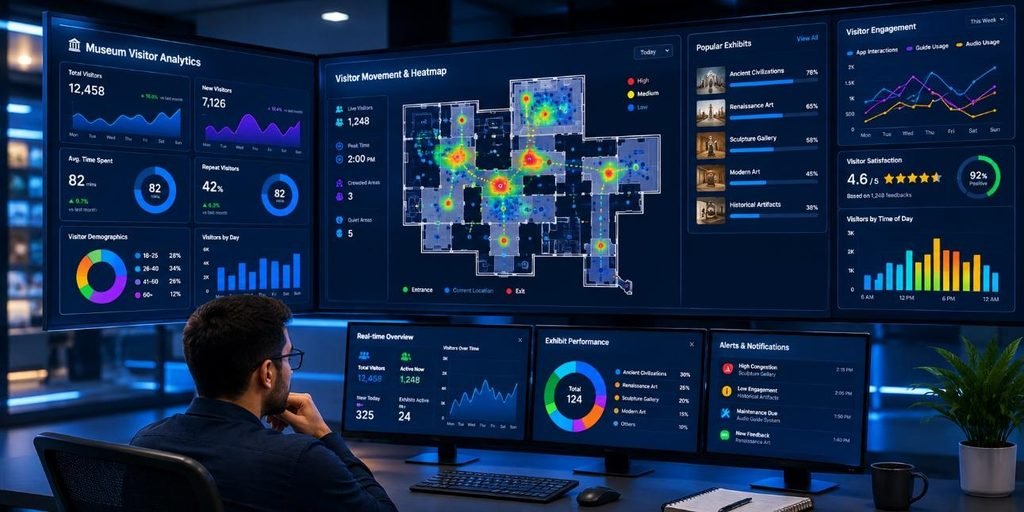
Machine learning capability includes learning and identifying visitor behavior patterns, including interests, browsing, location, and time spent. It then recommends relevant exhibits, events, or learning resources.
AI can also reveal important visitor behavior patterns, including:
- Which exhibits receive the most attention
- Where visitors stop or leave
- Which galleries experience congestion
- Which content generates repeat interactions
- Which exhibits are frequently overlooked
Analytics can improve signage, routes, programming, staffing, and exhibits. Museums should collect necessary data, explain its use, limit retention, and protect privacy.
It will also align with the NIST AI Risk Management Framework, which emphasizes security, accountability, transparency, explainability, privacy, and fairness. It also requires clear human responsibility for AI oversight.
Computer Vision for Exhibit Recognition and Navigation
Visitors can point out smartphone cameras at artworks or artifacts to instantly access stories, videos, and other information. Image recognition makes exhibits more interactive, helping visitors explore museum collections in a simple, engaging way. This type of experience is increasingly becoming part of smart exhibit spotlight features. It is quickly available through audio, video, translations, and interactive content. It can also make navigation easier to help with discovery and increase engagement as people walk through museums.
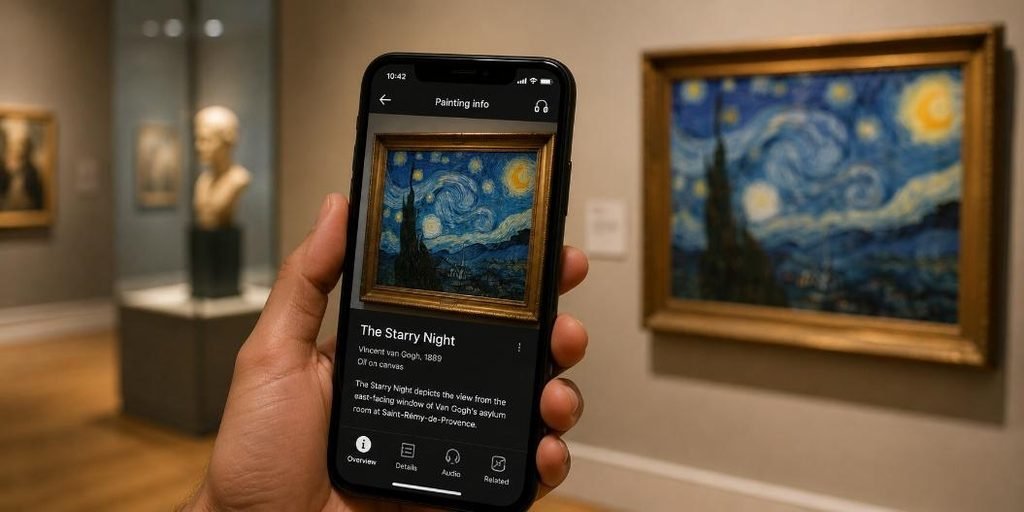
That creates opportunities for intelligent navigation:
Find → Recognize → Understand → Discover
For example, after recognizing an artwork, the system could recommend three related pieces located nearby.
A visitor interested in Impressionist art could receive a suggested route through relevant works. Or someone with limited time could receive a condensed route covering priority exhibits; a capability often found in smart tour guide features within museum apps.
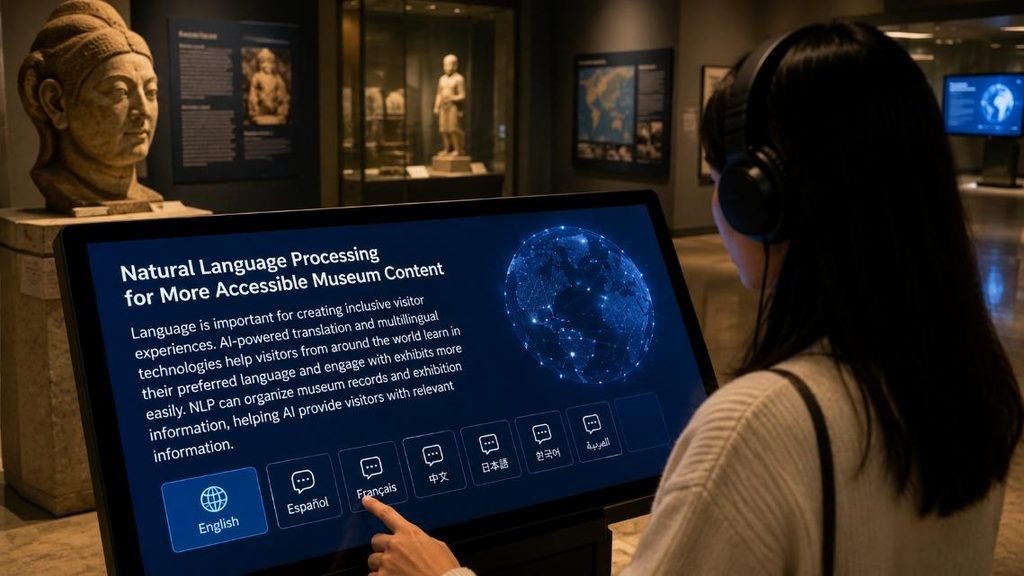
Technology should remain almost invisible. Visitors should not have to learn complicated interfaces just to benefit from intelligent guidance.
Natural Language Processing for More Accessible Museum Content
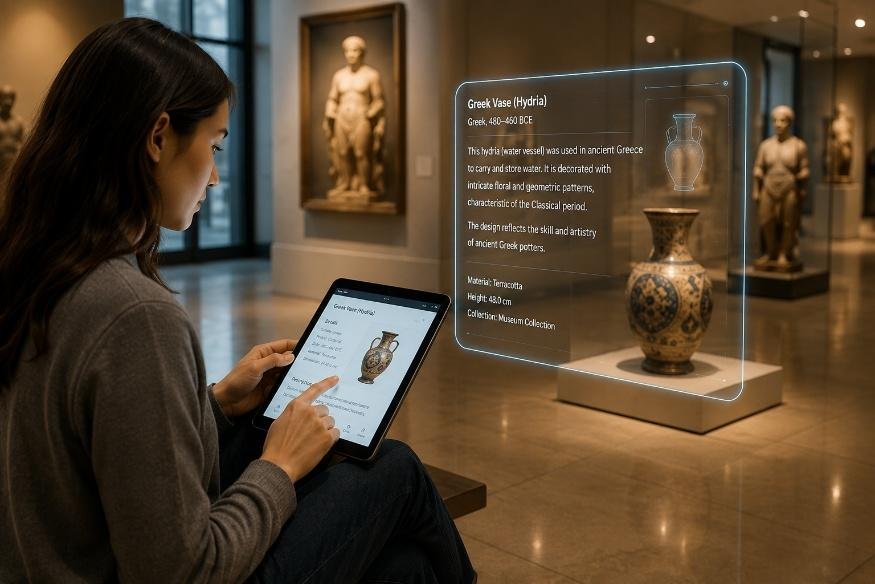
Language is important for creating inclusive visitor experiences. AI-powered translation and multilingual technologies help visitors from around the world learn in their preferred language and engage with exhibits more easily. NLP can organize museum records and exhibition information, helping AI provide visitors with relevant information.
NLP tools enable the Museum information to be discovered, understood and used in a more natural way by enabling questions to be answered using the most relevant content.
Generative AI for More Relevant Museum Experiences
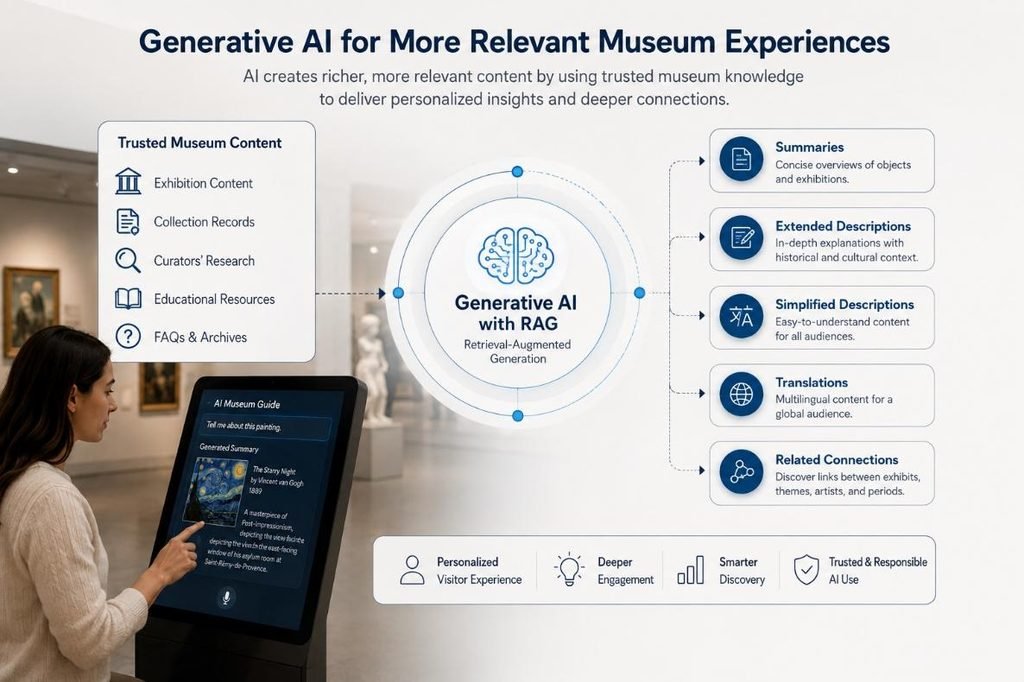
Generative AI for more relevant museum experiences. Generative AI can produce summaries, extended descriptions, simplified descriptions, and translated descriptions of museum objects and exhibitions. The AI-generated content is adapted to the needs of the individual visitor and is grounded in approved content, such as exhibition content, collection of records, curators’ research, and other reliable sources.
Retrieval-augmented generation (RAG) enables systems to use approved content in museums to generate the best possible response to visitors’ queries. Generative AI can also be used to ‘link’ between information within a museum’s collections, allowing for information to be discovered by visitors, between for example, exhibits, themes, artists and historical periods as well as through the museum’s educational resources and FAQs.
Conversational AI for Better Visitor Interactions
Typically, museums provide a fixed amount of information about artwork through labels. Audio guides follow a predetermined order of artworks, and viewers move from one to another.
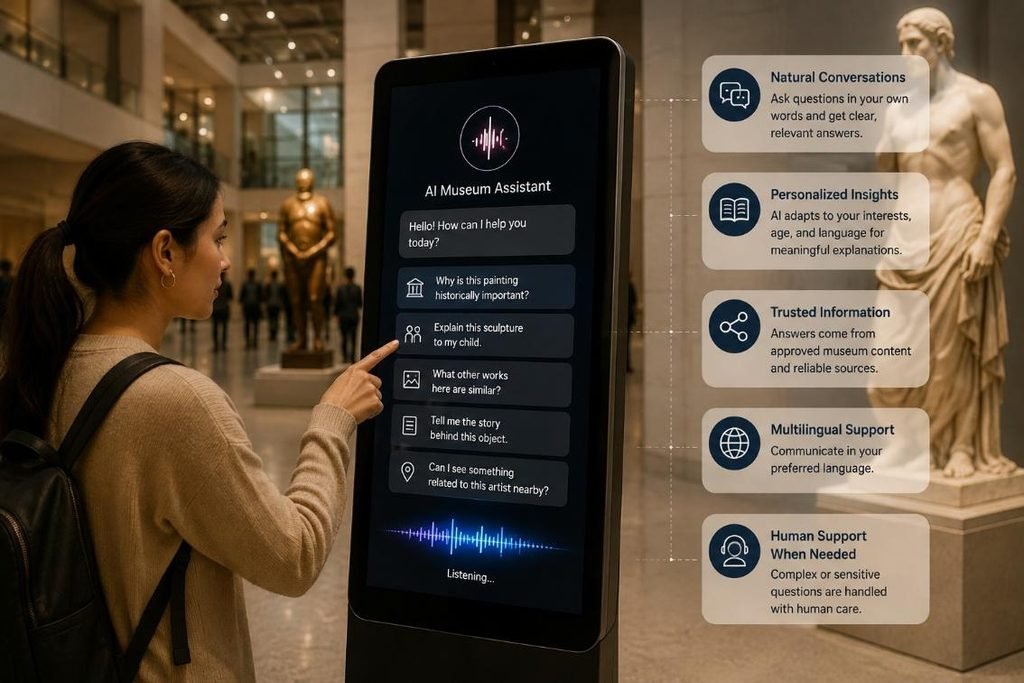
As AI is increasingly being implemented to facilitate greater amounts of information for museum visitors, these individuals can ask for the information they actually require getting the most from their visit.
Instead of having to read long descriptions, visitors can ask for the information they actually want.
- “Why is this painting historically important?”
- “Explain this sculpture to my child.”
- “What other works here are similar?”
- “Tell me the story behind this object.”
- “Can I get more work of this artist nearby?”
Conversational AI can adapt explanations to visitors’ questions, interests, age, and language. It uses trusted museum content to provide accurate answers and personalized information. RAG connects AI to approved sources, while human support handles difficult, sensitive, or unknown questions, ensuring visitors receive reliable guidance when needed.
Best Practices for Implementing AI in Museums
Successful AI adoption begins with the visitor problem, not the technology.
A practical implementation strategy can follow five steps:
1. Start with one high-value use case.
Choose a clearly defined problem such as repetitive visitor questions, exhibit discovery, multilingual interpretation, or navigation.
2. Build trusted museum content.
Create a structured knowledge base containing approved collection information, exhibition text, metadata, FAQs, accessibility content, and visitor-service information.
3. Design for human oversight.
People who work in curating, teaching, helping visitors, and managing technology should each have roles to review content, monitor AI performance, and handle exceptions.
4. Focus on results, not new ideas.
Measure clear signs of success, including exhibit engagement, content completion, visitor satisfaction, return visits, navigation, accessibility use, and reduced staff workload.
5. Establish governance before scaling.
Set clear rules for privacy, data storage, AI testing, accessibility, fairness, security, content accuracy, and handling problems before expanding AI across the museum.
The most effective museum AI programs are therefore not isolated from technology projects. They are visitor-experience initiatives supported by technology.
The Future of AI-Powered Museum Engagement
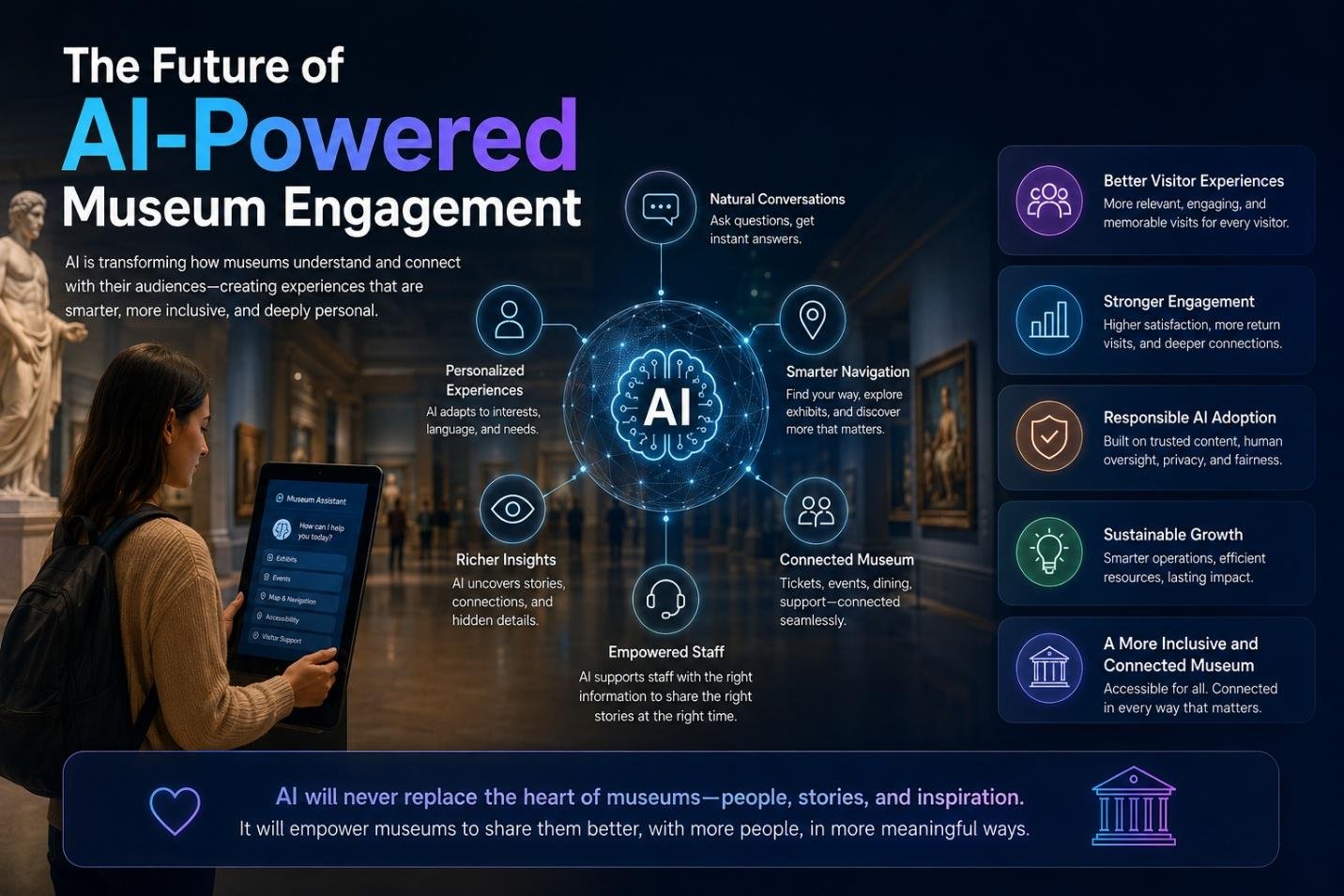
The future of museum AI now lies in easy, engaging, and more personal visits. The use of voice, screens, glasses, watches enhance visitor interaction, while AI connects tickets, navigation, exhibits, events, dining, and support.
AI does make interactions faster, natural, and tailored. However, it should also support museum staff by helping them share meaningful stories with the right visitors at the right time.
Author Bio
With 6+ years of experience in content writing and marketing, Jigyasa Nagpal creates clear, engaging content that connects technology, business, and customer experiences.
Alumni of Banaras Hindu University and Delhi University | Areas of Expertise: Health and Wellness Trends, IT, EdTech SEO Writing

Marketing Analytics Trends to Watch in 2026
September 8, 2026[…] […]