


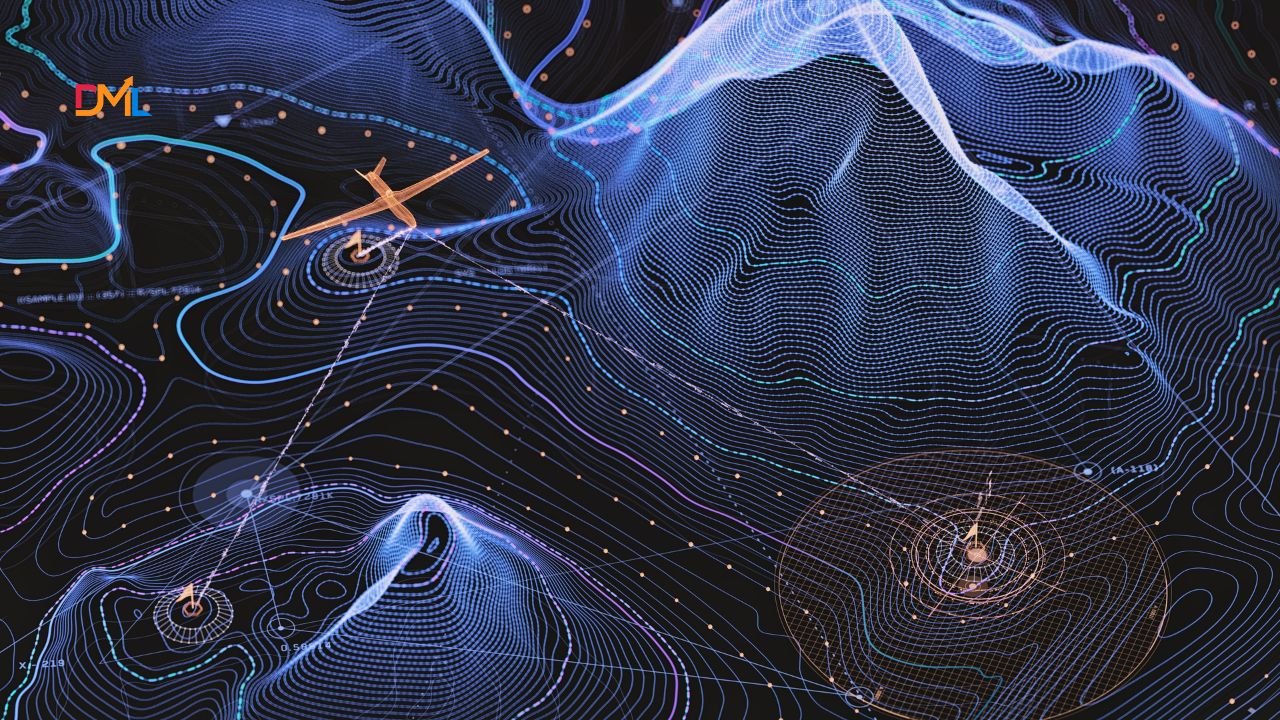
Real-time data analytics technology has shifted its focus from being exclusively based on analysis of past data to continuous comprehension of the current events. With the growth of automation and robotics, it becomes more difficult for organizations to depend only on traditional two-dimensional data sets. They want information in terms of the depth, distance, placement, shape, and movement of the object.
The growing use of real-time data is not limited to industrial or sensor-based applications. Businesses are also using advanced analytics to better understand customer behavior, campaign performance, and changing market patterns. Keeping track of emerging Marketing Analytics Trends can help organizations understand how AI, predictive analytics, automation, and data-driven decision-making are influencing modern marketing strategies. Across industries, faster access to meaningful data is becoming increasingly important for making timely and informed business decisions.
At this point, the use of 3D sensors and artificial intelligence (AI) are most common. 3D sensors help in gathering spatial information from the surroundings, which is then interpreted by the artificial intelligence system to detect objects, anomalies, and patterns. The trend has resulted in the rise of the 3D sensors market in different sectors such as automotive, manufacturing, robotics, healthcare, logistics, consumer electronics, construction, and intelligent infrastructure.
Understanding 3D Sensors
A 3D sensor provides a 3D representation of objects or physical spaces. The data collected by such sensors goes beyond what traditional cameras can record. By measuring distances and spatial relations, 3D sensors are capable of collecting depth maps, 3D point clouds, distances, size, geometry, coordinates, and motion data.
There are various methods of using 3D sensing technology, which include time-of-flight (ToF), structured light, stereo vision, and LiDAR. All these methods have unique features regarding their ranges, accuracy, speed, and environmental compatibility. ToF sensors use the time or phase difference of light that comes back to the device after being projected onto an object, whereas in the case of structured light technology, patterns are cast on surfaces and their alterations measured to obtain depth measurements. Stereo vision works by using images taken from different angles, and LiDAR uses laser pulses to get distance measurements of objects around.
Why is 3D Data Important for Real-Time Analysis?
3D sensors are special electronic devices which have been created to capture three-dimensional data about objects and physical environments. In addition to colors and intensity of light, these sensors can gather several types of data, such as depth maps, 3D point clouds, distance, size of an object, shape, spatial coordinates, and even movement data. Thus, machines can get additional spatial information and better understand the position, distance, shape, and movements of an object.
There are several approaches to implementing 3D sensing technologies. Time-of-flight (ToF), structured light, stereo vision, and LiDAR are some examples of those technologies. The capabilities of each of those technologies depend on many factors such as distance, accuracy, processing speed, environmental conditions, etc. Thus, ToF sensors use distance and phase of emitted light in order to measure the depth of an object, and structured light projects special patterns on surfaces and measures their deformation. Stereo vision calculates depth using images which are taken from different perspectives, and LiDAR creates a three-dimensional map of surroundings with the help of laser pulses.
AI Turns Spatial Data into Actionable Information
3D sensors may be capable of producing huge amounts of data, especially since the sensors continuously produce high-resolution depth information or even 3D point clouds. Analyzing manually collected data in many cases would not be possible due to time restrictions for some applications. An artificial intelligence solution is needed as the analysis layer that could effectively use the data through machine learning and deep learning techniques, including object detection, classification, 3D segmentation, object tracking, pose estimation, anomaly detection, scene recognition, and spatial prediction.
The research related to deep learning techniques for 3D point clouds is mainly associated with the aspects of classification, segmentation, detection, and tracking. This ability is crucial for the development of technologies like self-driving cars, robotics, industrial inspection systems, and others that have to understand the physical world around them. Instead of gathering millions of spatial data points, an AI-based system can interpret the information and make decisions in real time, for instance, the industrial application can analyze 3D data and figure out if the component is mounted correctly or not.
Faster Decision-Making is Possible via Edge AI
Real-time data analysis is dependent on the location of data processing. While traditional solutions would involve sending the collected data to the cloud for further processing, this method can create problems with latency and bandwidth due to the continuous generation of huge amounts of 3D data. To resolve this problem, Edge AI is employed, which enables part of the processing to occur closer to the sensor itself. Therefore, the system would perform analysis of the collected data on-site and send only the output results. For instance, an industrial machine might recognize dimensional defects in the 3D point cloud and send alerts without transmitting the full dataset to a remote cloud.
Application of 3D Sensors and Artificial Intelligence
The incorporation of 3D sensors and artificial intelligence is seen in various industries. The following are examples of applications showing how spatial data can be turned into information.
Automation in Manufacturing, Industrial and Construction
Manufacturing is one of the main areas where there is a lot of use of 3D sensing and AI technology in real-time analytics. 3D vision can help manufacturers to constantly inspect products, getting information about all possible issues related to dimensions, surface, or assembly. Then AI can analyze all the 3D data obtained to find deviations from the established standards and include such processes as dimensional inspection, detection of surface defects, verification of assembly, positioning components, robotic picking, workplace safety, and equipment monitoring. One of the most important capabilities is the ability to conduct quality inspection not only periodically or manually but continuously. For instance, on the production line, each component can be inspected using a 3D sensor and its geometry can be analyzed. Then AI can detect anomalies and defects in real time and allow making necessary adjustments. This combination of connected sensors, AI, robotics and industrial software also allows developing the concept of Industry 4.0 further.
Automobiles and Autonomous Systems
Another important domain of application for 3D sensing and artificial intelligence is the automotive industry. Autonomous cars and ADAS require continuous understanding of their environment in terms of traffic and roads. 3D sensors can help establish the location, distance, and movement of other vehicles, pedestrians, bicycles, and other objects. Different technologies, such as LiDAR, cameras, and radar, can work together in order to fuse sensor information into one picture, where each type of technology would provide different information; Cameras provide rich semantic information, LiDAR provides precise spatial information, and radar provides additional range and movement information. Combining this diverse input information with AI can help create a holistic picture of the environment.
Healthcare and Spatial Monitoring
3D sensing offers novel possibilities in the areas of healthcare and medicine by offering detailed information regarding movement, anatomy, measurements, and physical states. AI analyze this spatial information for any changes or patterns that are not easily observed through traditional methods. Some possible uses for 3D sensing in this context are patient movement monitoring, rehabilitation monitoring, posture evaluation, 3D medical imaging, anatomical measurements, and surgery planning. For instance, 3D sensing can be used to record the patient’s movements in rehabilitation treatment, while AI will analyze changes in posture, balance, or movements between several treatments. This would make it easier to get more consistent measurements of the patient’s physical state and see if anything needs to be done. Hence, 3D sensing has uses that go beyond making three-dimensional images, as it can translate spatial changes into useful measurements.
Challenges for 3D Sensors and AI Technology
While there is considerable potential in 3D sensing and AI technologies, there are a number of factors that may impact their use.
- Higher data volumes: 3D sensors are capable of producing a lot more data than regular sensors. The storage and analysis of this information might require certain computational and infrastructure capabilities.
- Higher computational complexity: AI applications that use complex AI models as well as point clouds require significant computational capabilities. It is essential to have effective algorithms and edge hardware to address the issue.
- Environmental conditions: Certain aspects related to environmental factors such as lighting, reflective surfaces, weather conditions, dust, occlusion, position of sensors, etc., might impact sensor operation negatively.
- Integration: It is required for the organization to integrate 3D sensors with the current cameras, control systems, cloud platform, databases, AI applications, etc.
- Privacy and Cybersecurity: Privacy becomes increasingly important when 3D sensors work with people or in open public spaces. It is also necessary to ensure the cybersecurity of connected sensing infrastructure.
Future Prospects and Conclusion: Towards Real-Time Spatial Intelligence
The prospects of the market for 3D sensors are becoming increasingly tied to breakthroughs in artificial intelligence, edge computing, robotics, digital twins, and sensor fusion. Instead of just working on increasing sensor resolution, attention should be shifted towards the creation of systems able to gather, process, interpret and react to spatial data in real time.
convenient tools to access and manage online content can also support research, training, and reference-based workflows. For example, a YouTube Video Audio Downloader can help users save publicly available video or audio content for permitted offline use, making it easier to revisit tutorials, demonstrations, presentations, or other educational resources when needed. Such tools can complement broader digital workflows where multimedia content serves as a useful source of information.
Among the important trends will be contraction and power efficiency of sensors, AI models for edge devices, innovations within the realm of LiDAR and depth sensing, increasing levels of sensor fusion, real-time analysis of 3D scenes, and the rising popularity of AI-powered robotics and digital twins. According to the market research carried out by Pristine Market Insights, the increasing adoption of 3D sensing and AI has an impact on the development of real-time analytics in different industries. Currently, there are applications for these technologies in manufacturing, automotive, robotics, healthcare, logistics, and construction.
Author Bio:
Teja Kurane is a research analyst specializing in electrical and electronics technologies, advanced sensing systems, and emerging digital solutions. Teja focuses on developments in 3D sensors, artificial intelligence, and real-time data analytics. Through research-driven insights, Teja examines how intelligent sensing technologies are enabling faster, more accurate, and actionable data-driven decisions.