




With cloud technologies gaining ground as key assets in digital transformation efforts across companies of all sizes, cyberattackers have found the opportunity to target cloud environments more than ever before. By transferring vital workloads and data to the cloud, companies expose themselves to greater risks in case of an attack. In accordance with IBM’s Cost of a Data Breach report, the typical cost of a data breach related to cloud services exceeds $4.45 million.
If your company uses AWS, Azure, or Google Cloud workloads or any hybrid cloud architecture, read our expert tips on how to keep your cloud data protected.

Why Cloud Data Is Uniquely Vulnerable
The cloud computing environment is characterized by the adoption of shared responsibility. This implies that the cloud service provider takes care of security at the infrastructure level, while it’s your job to take care of the security of the contents inside: data, identity, applications, and configuration.
This misconception contributes significantly to many cases of breach through clouds. Inadequate bucket configuration, excessive privileges to IAM roles, open-ended APIs, and non-existent encryption of the data are some of the most common points where hackers get into the system.
Some of the other elements which make it easier for clouds to be attacked include:
- Multi-tenancy exposure – meaning that your data resides with other companies’ data on shared infrastructure
- APIs that can easily be targeted – since they form the foundation of any cloud service
- Shadow IT – which is associated with employees setting up their own cloud infrastructure
- Insider threats – from malicious insiders and careless insiders with excessive privileges
Understanding these vulnerabilities is the first step toward building a strong cloud data security framework. Organizations that want to go beyond awareness should consider pursuing VAPT Certification, which provides formal validation that both network and application layers have been tested against real-world attack scenarios, giving cloud-dependent businesses a structured baseline to measure and improve their security posture.
Core Principles for Data Protection in the Cloud
1. Implement a Zero Trust Architecture
The old saying that “you have to trust but verify” has no place in today’s cloud world. The concept of Zero Trust means you should never trust, always verify – everything that is trying to connect has to be verified and has the appropriate authorization to proceed.
Key Zero Trust principles include:
- Using Multi-Factor Authentication (MFA) for all account accesses
- Setting up least-privilege access controls to give minimum permissions to users
- Performing micro-segmentation of resources for isolating workloads
- Monitoring access activities continuously
The Zero trust architecture from NIST is a good starting point for any organization wanting to adopt the Zero Trust approach in the cloud.
2. Encrypt Everything – During Transport & When Stored
Encryption is a failsafe measure in case everything else fails. Should the malicious individual succeed in exfiltrating encrypted data without decrypting it with the appropriate keys, there is not much harm caused by the attack.
Best practices for encrypting your data in the cloud:
- Employ AES-256 encryption on your data that is stored in your storage options
- Use TLS version 1.2 and above for any data that is being transported
- Encrypt your data using your customer-managed keys (CMEK)
- Properly store and manage keys using options such as AWS KMS, Azure Key Vault, or Google Cloud KMS
Organizations operating within HIPAA, PCI-DSS, or GDPR guidelines must ensure that encryption is done as part of compliance requirements.
3. Establish Robust Cloud Data Backup Practices
No security strategy is complete without a reliable cloud data backup plan. Ransomware attacks have evolved to specifically target backup systems, making it critical to maintain immutable, off-site, and air-gapped backup copies.
A resilient backup strategy should follow the 3-2-1 rule:
- 3 copies of your data
- 2 stored on different media types
- 1 stored offsite or in an isolated cloud environment
Automated backup scheduling, regular restoration testing, and version control ensure that when an attack occurs, your recovery time objective (RTO) and recovery point objective (RPO) remain within acceptable business limits.
Hybrid Cloud Data Protection: Bridging Two Worlds

In today’s business environment, many companies run their operations in a hybrid cloud setting, which combines traditional infrastructure with the cloud. Although this approach provides advantages such as scalability and cost-effectiveness, it can expose organizations to vulnerabilities where there is no uniformity in policy implementation.
The following features are essential for effective hybrid cloud data security:
- Consolidated monitoring of on-premises and cloud assets via a unified SIEM solution
- Uniform IAM policies implemented on-premises and in the cloud
- Network segregation between the cloud and on-premises systems to limit the spread of any breach
- Implementation of DLP software that regulates data transfers between environments
Products such as Microsoft Defender for Cloud, Palo Alto Prisma Cloud, and VMware Carbon Black offer comprehensive monitoring and management capabilities in hybrid deployments, thus being suitable solutions for businesses operating in such an environment.
Developing a Cloud Data Recovery Strategy
Despite having top-notch preventive measures, breaches will still occur. What separates surviving organizations from unsuccessful ones is their preparation in terms of their cloud data recovery strategies.
Here are the key elements of a sound cloud data recovery strategy:
Incident Response Playbooks – Defined protocols for various attack vectors (ransomware, insider threats, DDoS, data exfiltration). Each employee within the organization involved in security must be aware of their tasks even prior to the attack.
Disaster Recovery Simulation Drills – Conducted to determine your ability to recover from incidents, such as restoring your data, restarting your systems, and communicating with all stakeholders while under pressure. Quarterly disaster recovery drills are common practice.
RTO and RPO Definitions – Defined RTO and RPO goals for every critical system within your organization to ensure the necessary level of business continuity.
Root Cause Analysis and Forensics – Once you contain the breach, figuring out how the attack happened is crucial for preventing further attacks. Cloud-native monitoring and logging tools, including AWS CloudTrail, Azure Monitor, and Google Cloud Audit Logs, can assist in investigating.
For more information on incident response frameworks, you can find valuable information here.
Cloud Data Security Solutions Worth Considering
The cloud data security solution space is highly mature by now. If you are either a small or large company, you would need to consider these kinds of solutions as a matter of course:
| Solution Category | Purpose | Example Tools |
|---|---|---|
| CASB (Cloud Access Security Broker) | Visibility and control over cloud app usage | Netskope, Microsoft Defender for Cloud Apps |
| CSPM (Cloud Security Posture Management) | Detect misconfigurations and compliance gaps | Wiz, Orca Security, Lacework |
| CWPP (Cloud Workload Protection Platform) | Protect workloads, containers, and serverless | Aqua Security, Sysdig |
| SIEM / SOAR | Threat detection, correlation, and automated response | Splunk, IBM QRadar, Microsoft Sentinel |
| DLP Tools | Prevent unauthorized data exfiltration | Symantec DLP, Forcepoint |
Selecting the right combination depends on your cloud provider, compliance requirements, and existing security infrastructure.
The Role of a Cybersecurity Services Provider
There are many organizations, including those that do not have big cybersecurity teams, which greatly benefit from engaging with a cybersecurity service provider. This will help organizations leverage the experience of the provider who has more knowledge, experience in monitoring threats, and access to threat intelligence that the internal team might not have.
An experienced cybersecurity provider should be able to assist organizations in:
- Designing their cybersecurity architectures and securing cloud migrations
- MDR with 24/7 threat monitoring
- Cloud-specific vulnerability assessments and penetration tests
- Readiness assessments for SOC 2, ISO 27001, and FedRAMP compliance requirements
One needs to evaluate the potential provider based on its expertise in cloud-specific cybersecurity, certifications (CISSP, CCSP, or CSA STAR), and incident response SLA. with an established cybersecurity services provider ensures your cloud environment is continuously monitored and hardened against evolving threats.
Cybersecurity Program Development for Cloud Environments
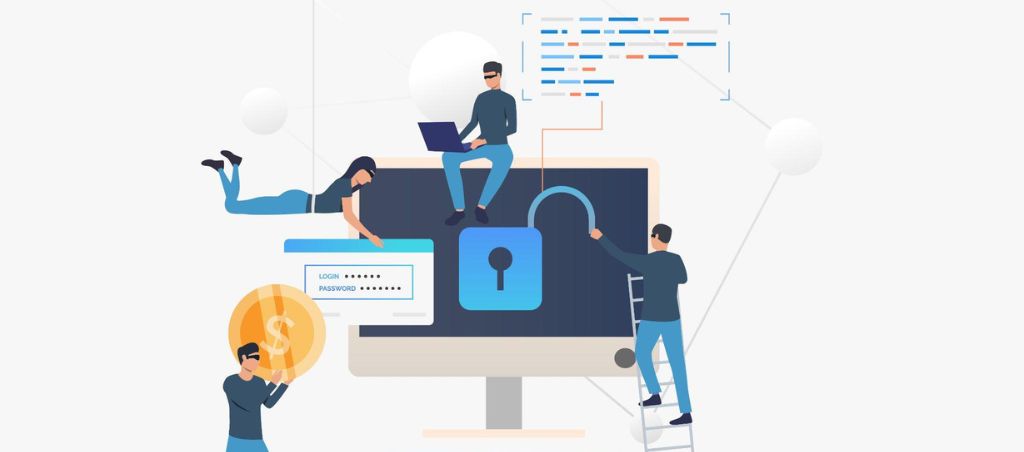
The protection of cloud data is not a single effort but a continuous process. The Cybersecurity Program Development focuses on developing a systematic, scalable, and measurable security program that scales with your organization and its environment.
The core elements of an advanced cybersecurity program are:
- Governance and Policy Framework – Establishing cybersecurity policy, ownership, and accountability within the organization
- Risk Management Process – Continuously assessing cloud-based risks and developing ways to mitigate them
- Security Awareness Training – Human error is the most common reason for cyberattacks. Frequent training will reduce the chances of employees falling prey to phishing attacks and increase their willingness to report incidents
- KPIs and Metrics – Measuring success using Mean Time To Detect (MTTD), Mean Time To Respond (MTTR), and patch management
- Continuous Improvement – Improving control based on audit results, red-team exercises, and threat intelligence
If your organization is seeking to enhance internal skills, you can consider ISACA’s cybersecurity framework or align your program according to the NIST cybersecurity framework. This framework is a broadly adopted structure for managing cybersecurity risk.
For organizations developing cloud-native applications in addition to cybersecurity programs, it is important to understand the principles of cloud application security.
Common Errors That Compromise Data Security in the Cloud
Despite having experienced IT staff members, many companies still commit preventable errors.
Some of the common mistakes include the following:
- Use of default credentials for cloud instances or database services
- No multi-factor authentication (MFA) for admin users
- Storage bucket permission settings that allow public access to data
- No auditing or alerts for anomalies in usage or changes to configurations
- Lack of patch management of OS or apps used in the cloud environment
An audit of cloud security is essential for any company. This audit may be conducted internally or by an external party. Companies use automated cloud infrastructure security assessment tools for consistent analysis of their security posture.
As cloud environments continue to evolve, the role of AI in Software Development is becoming increasingly significant. From automating code reviews to predicting vulnerabilities before deployment, AI-driven tools are reshaping how secure applications are built and maintained. Developers are now leveraging insights from resources like Future of AI in Software Development Trends Innovations 2025 to stay ahead of emerging trends such as intelligent debugging, automated testing, and adaptive security protocols. This shift not only accelerates development cycles but also strengthens cloud security by identifying risks earlier in the software lifecycle.
When working with cloud configurations, APIs, or documentation, properly formatted links are essential for both usability and security clarity. Instead of manually coding anchor tags every time, using a URL to HTML Link Converter can save time and reduce errors. Tools like URL to HTML Link Converter allow you to instantly convert plain URLs into clean, clickable HTML links that are ready to embed in your content, dashboards, or documentation. This becomes especially useful when sharing resources across teams or publishing technical guides where consistent formatting improves readability and professionalism.
Final Thoughts
A data breach in the cloud is not an inevitability; it is an eventuality that is wholly avoidable, provided that the proper strategies and technologies are put into play. From adopting a Zero Trust policy to encrypting data, creating a cloud data recovery solution, and engaging a cybersecurity company for your needs, each additional line of defense helps lower your risk.
The best prepared companies take a proactive approach towards cloud data protection, recognizing that it takes people, process, and technology equally to be truly protected. Additionally, they know how to respond effectively to any threats that arise.
First, understand what your weaknesses are; next, focus on controls that mitigate your risk areas; finally, build from there. Spending now on protecting your cloud data will cost much less than remedying the damage done by a future breach.