



Flutter is still one of the most preferred platforms for developing cross-platform applications. Its capacity to generate a single code for iOS, Android, web, and desktop applications makes it a time-saver and cost-efficient option for any business. Still, the cost of developing its application in 2026 depends on many factors, such as complexity, functionality, design, and team involvement.

The Cost of Flutter App Development in 2026
Understanding the current average costs of developing an application of different types is one of the things you need to do before you prepare a budget for your Flutter application project. The cost of developing an application can greatly depend on the app complexity, functionality, design, back-end infrastructure, integrations, and developer experience.
In 2026, costs for a Flutter application development process may come to anything between $40,000 and $200,000 depending on all the aspects from above. For example, if a simple app has a limited amount of functions and functionalities it will require less investment than an enterprise one with integrations and lots of features.
| App Type | Estimated Cost |
|---|---|
| Simple MVP or basic app | $40,000–$60,000 |
| Medium-complexity app | $60,000–$120,000 |
| Complex enterprise solution | $120,000–$200,000 |
These figures should be considered as approximate estimates rather than fixed prices. The actual cost of developing an app using Flutter depends on various aspects, including the features you want to include, the level of complexity of the user experience, and more.
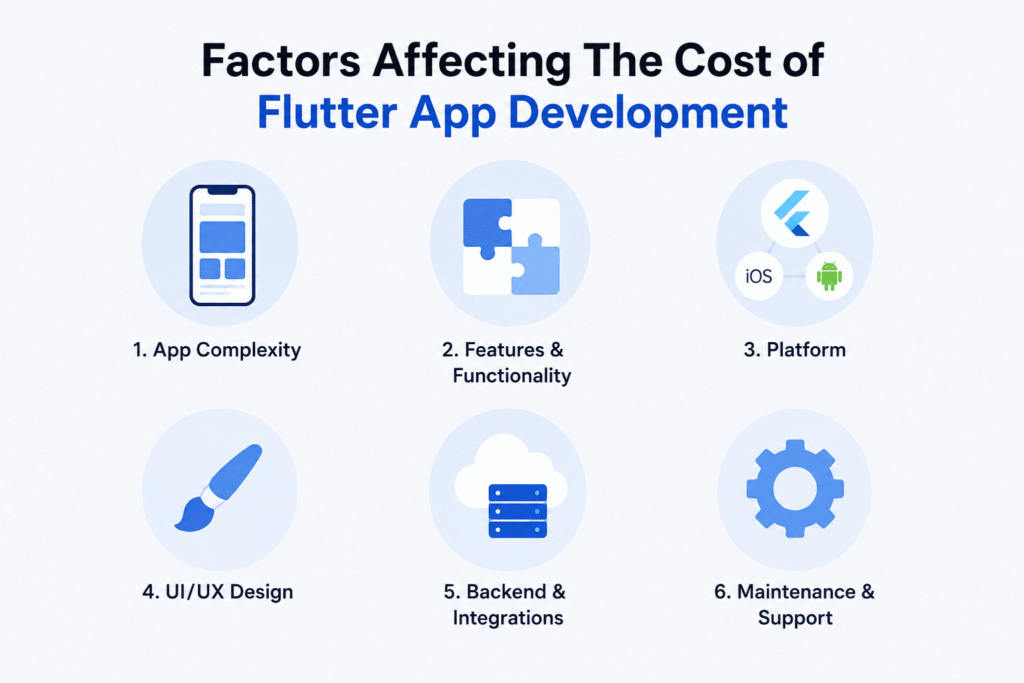
Essential Factors Affecting The Cost of Flutter App Development
Several factors can influence the overall cost of the development process. Knowing what these factors are when planning Flutter mobile development services can help you create a more accurate budget and avoid unexpected expenses along the way.
1. App Complexity and Features
The scope of functionalities is among the factors that affect the costs of app development. Simple apps do not require too many resources as opposed to sophisticated solutions that need more time and expertise. Features that can increase costs include:
- Real-time messaging
- AI-powered functionality
- Payment systems
- Geolocation
- IoT integrations
- Multiple user roles
AI-powered features can also increase the scope and cost of Flutter app development, especially when the app needs automation, personalization, or intelligent decision-making. For example, businesses exploring LLMs in Custom Software may need features such as smart search, automated workflows, chat-based support, content generation, or data analysis. These capabilities often require additional backend logic, API integrations, security controls, and testing, which can raise both development time and overall project cost.
2. UI/UX Design
The design determines not only how an app looks, but also how the users will work with it. The level of customization influences the budget allocated for the app development.
A basic interface that relies on standard Flutter widgets is much cheaper compared to a highly personalized one, including animations and an original brand image. The quality of UI/UX affects usability positively, but it also requires more time and resources for deployment.
3. Backend and Third-Party Integrations
Many applications offer support from external systems to perform data management, enable transactions, and facilitate various business operations. How complicated these integrations are can heavily affect the overall project budget.
Other prices may come from the following sources:
- The implementation of custom APIs;
- Cost for cloud environment;
- Payment systems;
- CRM or ERP implementation;
- Upkeep of advanced security measures.
4. Location of the Development Team
The location of your Flutter team can greatly influence the hourly rates as well as the budget. The cost in North America and Western Europe is high because their teams have higher rates as compared to the teams in Eastern Europe and offshore.
5. Platform and Security Requirements
The requirements of both platforms and security have an impact on the extent of development activities. The cost of development can be increased if mobile platforms, desktop and web versions of the application are created simultaneously as well as when some industry regulations have to be met.
Other Costs that Need to Be Addressed
The development stage is the first step in the life cycle of an application. Planning for additional costs is essential for the long-term health of an application. It is also important for businesses to take into account:
- Support and maintenance
- Correcting bugs
- Cloud computing costs
- Fees charged by third parties
- Development of new features
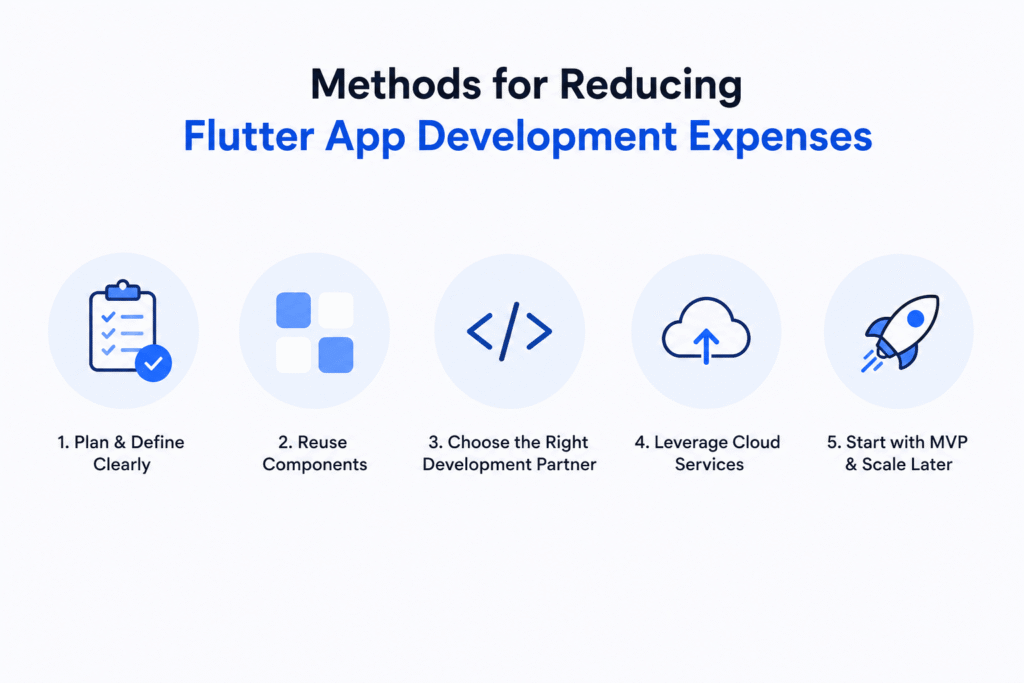
Methods for Reducing Flutter App Development Expenses
Creating an application using Flutter should not necessarily involve high costs. If all possible measures are taken during planning and development, companies can save lots of money and still come up with a high-quality product. Attention to payments for functions performing only the essential functions and effective use of Flutter’s benefits. We identified some effective techniques to help maintain expenses on Flutter app development in limits:
Creating a Minimum Viable Product (MVP)
A minimum viable product (MVP), in simple terms, provides a business with a set of core functionalities and helps them to test their idea in the market before designing a final product. This saves a lot of resources at the beginning and gives the company an opportunity to get feedback to proceed with further developments.
Identifying Key Functions First
By prioritizing the most relevant features, businesses can avoid wasting time and money on features that wouldn’t work properly or fulfill unique consumer needs. The rest of the functions can be added later when there will be a real need for them in the marketplace.
Leveraging Flutter’s Reusable Widgets
It’s true that the use of reusable widgets and other components in Flutter can make a great impact on the development process. Thus, you will find that it can assist in lessening the amount of custom code that needs to be present in the project which ultimately allows one to reduce the expenses on it.
Designing for Scalability Right from the Beginning
With well-planned application architecture, it becomes much easier to include new features as well as manage growth in the future. This, in turn, helps businesses inhibit unnecessary redesign as well as saving significant costs.
Teaming Up with a Reliable Flutter Developer
Finding the right developer helps businesses achieve the successful implementation of the designed project. The experience of the selected developer guarantees that their services will help avoid unnecessary mistakes and deliver a high-quality application within the pre-planned budget.
Final Thoughts
Flutter is an affordable way to create apps, although the final cost will depend on the goals and technical requirements of the project.
In 2026, the cost of Flutter projects ranges from $40,000 to $200,000+ based on the complexity of the application and its features, design, integration with other services, and security requirements.
Defining the scope of your project and setting up a plan helps you control costs while also making sure you have developed an app that will fit your needs.